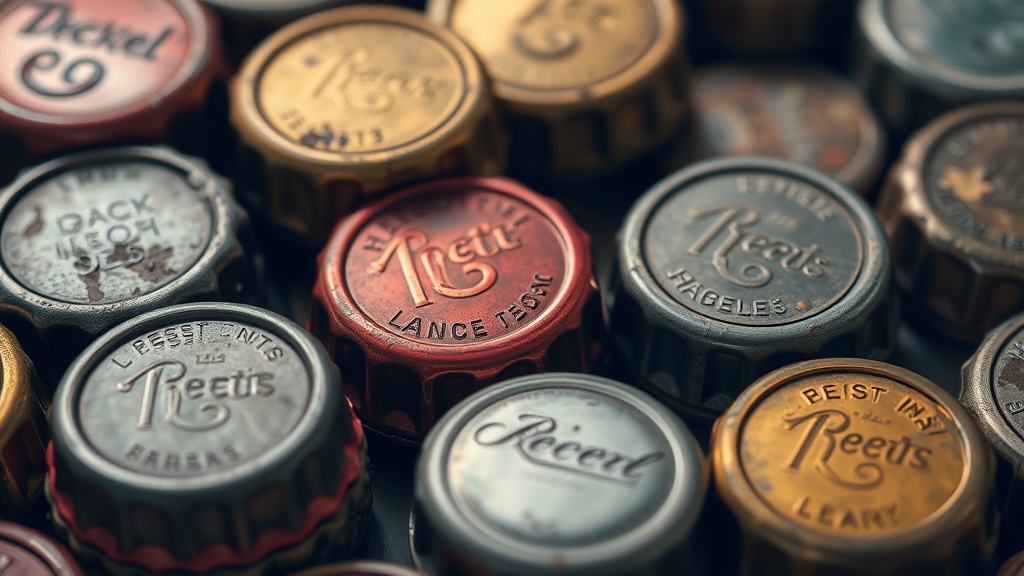
Identifying Rare Variations in Vintage Metal Caps

This guide explains how to identify rare variations in vintage metal milk caps by examining material composition, printing errors, and manufacturer markings. You'll learn to distinguish between common production runs and high-value anomalies that collectors often overlook. Understanding these nuances is the difference between holding a standard piece of history and a high-value rarity.
What Makes a Metal Milk Cap Rare?
A metal milk cap becomes rare when it features a unique combination of a limited production run, a specific material deviation, or a documented printing error. Most collectors look for "errors" that weren't intentional, but in the world of vintage bottle caps and milk caps, a mistake at the factory can lead to a massive spike in value. It isn't always about the age of the item—sometimes, it's about the specific way it was made.
Standard production is predictable. You see thousands of the same design. However, during the mid-20th century, manufacturing processes for metal-lined caps were less automated than they are today. This led to inconsistencies in the metal-to-paper ratio and the way ink adhered to the surface. These inconsistencies are exactly what we hunt for.
There are three primary categories of rarity in this niche:
- Material Variations: Changes in the metal substrate (e.g., switching from tin to aluminum) or the thickness of the lining.
- Colorway Deviations: Using a slightly different shade of ink due to a batch change at the printing house.
- Structural Anomalies: Unusual rim shapes or non-standard diameters that deviate from the standard manufacturer's specifications.
If you're already starting a collection, you might want to check out the complete guide to collecting vintage milk caps to ensure your foundation is solid before hunting for these high-end variants.
How Can You Spot a Printing Error Variation?
You can spot a printing error by looking for misaligned graphics, color bleeding, or "ghosting" where the image appears twice. These aren't just defects; they are often the result of the high-speed mechanical presses used by companies like Coca-Cola or local dairy producers in the 1940s and 50s. A slight shift in the printing plate can result in a "misprint" that makes a cap much more desirable to specialists.
Look closely at the edges of the lettering. Is the text perfectly centered? If the text is slightly off-center or if one letter is a different color than the rest, you might have a strike-through error. These are highly sought after because they represent a moment where the machinery failed to hit its mark. It's a tiny detail, but it matters.
Common Error Types in Metal Caps:
- Color Bleed: When the ink spreads beyond the intended line, creating a fuzzy or "blurry" look.
- Double Strike: When the press hits the metal twice, creating a faint shadow of the design.
- Missing Ink: A specific part of the design (like a logo or a date) that is missing entirely due to a clogged ink feed.
- Color Shift: When the blue of a sky is a slightly different hue than the standard version of that specific cap.
I've seen collectors spend years looking for a specific "blue" version of a standard cap, only to realize it was just a light-struck fade. Always use a magnifying glass to confirm if the color variation is part of the original print or just wear and tear. If it's a genuine ink-mix error, the value holds up much better.
What Should You Look for in Metal Composition?
You should look for differences in the weight, thickness, and oxidation patterns of the metal to identify composition variations. While most vintage caps are made of tin-plated steel, certain eras or specific brands used different alloys or even aluminum-based liners. This change in material can significantly change how the item ages and how it reacts to moisture.
A heavier cap usually suggests a thicker gauge of steel, which was common in early 20th-century production. If you find a cap that looks identical to a common one but feels significantly lighter, you might have found a later-era variation or a different material altogether. This is a key way to distinguish between a "standard" cap and a "premium" or "specialty" version.
| Feature | Standard Metal Cap | Rare Variation (Metal/Liner) |
|---|---|---|
| Weight | Consistent/Standard | Noticeably lighter or heavier |
| Oxidation | Uniform rust/patina | Localized or unusual corrosion patterns |
| Edge Profile | Standard crimp | Non-standard or specialized crimp |
| Liner Thickness | Uniform | Variable or non-standard material |
One thing to watch out for is how the metal reacts to the environment. A tin-plated cap will oxidize differently than an aluminum-lined one. If you're worried about how these materials are holding up, you can follow my steps in keeping your vintage metal caps rust free. It’s a good way to ensure that a rare material variation doesn't turn into a pile of dust.
The metal itself tells a story. A cap from a high-end dairy might have a much more polished, durable finish than a generic brand's cap. This wasn't just about aesthetics—it was about the prestige of the product. When you're looking at a piece, don't just see a cap; see the engineering behind it.
How Do You Verify a Variation's Authenticity?
To verify a variation, you must compare your item against a known "standard" specimen or a documented reference catalog. You can't rely on a single photo from an auction site—you need to look at the physical properties of the object. This involves checking the weight, the specific color hex-code (roughly speaking), and the physical dimensions of the rim.
Don't trust a seller who says, "This is a rare one, trust me." That's a red flag. A professional collector will always provide a reason for the rarity. If they can't explain *why* it's rare—whether it's a color shift, a metal change, or a specific printing error—you should be skeptical. It’s better to be safe than to spend your budget on a common cap that someone simply mislabeled.
Here is a quick checklist for verification:
- Compare Dimensions: Use a caliper to check the diameter. Is it 26mm or 28mm? Even a 1mm difference can indicate a different manufacturer.
- Weight Check: Use a digital scale. A difference of even a gram can signal a change in metal composition.
- Magnification: Use a 10x jeweler's loupe to look at the ink edges. Is the "error" a genuine printing mistake or just a scratch?
- Cross-Reference: Look for the manufacturer's name or patent numbers on the rim or underside.
If you're dealing with a piece that has significant surface wear, be careful. Sometimes, what looks like a "matte finish" variation is actually just decades of friction. Always clean your pieces properly—refer to my guide to cleaning and preserving vintage milk caps—before making a final determination. You want to see the true surface of the metal without any grime obscuring the details.
The world of vintage metal caps is full of tiny details that most people walk right past. But once you start looking for the errors, the weight shifts, and the ink deviations, the hobby becomes much more interesting. It’s no longer just about collecting "stuff"—it's about being a detective. Happy hunting.