Tracing the Global Origins of Milk Cap Manufacturing

Where do the metal caps on your vintage milk bottles actually come from? This post tracks the manufacturing origins of milk cap production, moving from the early industrial era in Europe and North America to the specialized factory lines of the 20th century. Understanding these origins helps you identify why certain caps have specific weight profiles, metal compositions, or stamp patterns.
Where Did the First Milk Cap Manufacturers Originate?
The earliest metal cap manufacturing began in the late 19th century within the industrial hubs of Germany and the United Kingdom. Before standardized plastic lids, the industry relied on heavy-gauge tin and steel production processes developed during the Industrial Revolution. Early manufacturers had to adapt existing metal stamping technology used for much larger industrial components to create smaller, food-safe closures.
During this period, the metalwork was largely a byproduct of the broader tinplate industry. If you look at early specimens, you'll notice they often lack the precise, uniform crimping found in later decades. They were often hand-finished or produced on much slower, less efficient presses. This lack of uniformity is exactly what makes them so valuable today.
German manufacturers, in particular, led the way in precision metalwork. The tinplate industry in Europe provided the raw materials needed to create the thin, yet durable, metal disks used for sealing glass bottles. These early manufacturers weren't just making caps; they were perfecting the art of the seal to prevent spoilage.
It’s a bit of a game of precision. If the metal was too thin, it wouldn't hold the seal; if it was too thick, the cost of production would skyrocket. Finding a cap from this era that hasn't completely disintegrated is a genuine win for any collector.
How Were Vintage Milk Caps Made?
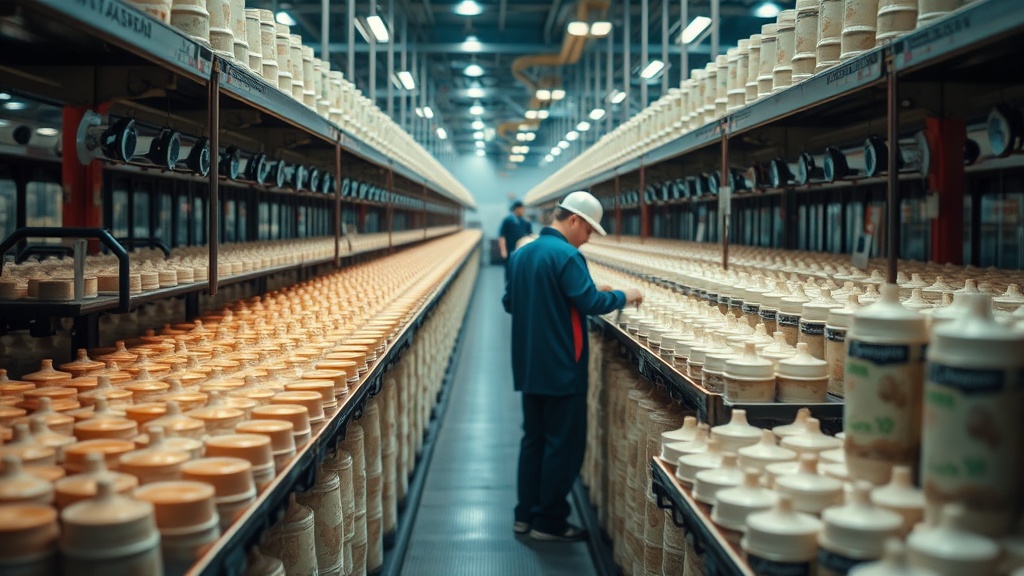
Vintage milk caps were manufactured through a process of high-speed metal stamping and die-cutting. A large roll of sheet metal—usually tin-plated steel—was fed through a machine that cut out the circular shape and simultaneously formed the rim or the crimping edge. This ensured that every cap produced was nearly identical in diameter and thickness.
The process generally followed these steps:
- Sheet Preparation: Large sheets of steel were coated with a thin layer of tin to prevent oxidation (rust).
- Blanking: A heavy die-punch cut the circular "blanks" from the sheet.
- Forming: The blanks were fed into a press that shaped the edges, creating the lip that would eventually grip the bottle neck.
- Finishing: Some caps were embossed with brand names or logos during the stamping phase, while others were printed later using lithography.
The quality of the metal determines how well a cap survives. You'll often see "tin" used colloquially, but most of these were actually steel-based with a tin coating. This distinction is important because pure tin is much softer and less prone to the sharp edges seen in steel-based vintage caps. If you're interested in the long-term survival of your collection, you should check out my guide on keeping your vintage metal caps rust free.
The manufacturing-grade metal used in the mid-20th century was incredibly consistent. This consistency is why you can often find a "standard" size for a specific brand's bottle. There wasn't much room for error when you're dealing with millions of units a year.
The Role of Material Quality
Not all metals are created equal. When you're looking at a collection, you'll notice a huge difference between the lightweight, thin caps of the late 1970s and the heavy, substantial caps of the 1940s. The material composition changed as global steel prices and manufacturing technologies evolved.
| Era | Common Material | Typical Characteristic |
|---|---|---|
| Late 1800s/Early 1900s | Heavy Tin/Steel | Thick, irregular edges, heavy weight |
| 1920s - 1950s | Tin-plated Steel | Consistent crimping, embossed logos |
| 1960s - 1980s | Lightweight Aluminum/Steel | Thinner, more uniform, often printed |
The shift toward lighter materials was driven by a desire to reduce shipping costs and material waste. It's a classic example of how industrial efficiency can actually change the physical "feel" of a collectible item. A 1940s cap feels much more substantial in your hand than a 1970s version.
Why Do Different Brands Have Different Cap Styles?
Brands developed unique cap styles to ensure their products were easily identifiable and to protect their proprietary sealing methods. A manufacturer might use a specific crimp pattern or a unique embossing style to prevent competitors from easily mimicking their look. This was a form of physical branding that went beyond just the label on the bottle.
The design of the cap was often dictated by the shape of the bottle neck. A wide-mouth glass bottle required a completely different stamping die than a narrow-neck bottle. This is why you can't just swap a cap from one brand to another—even if they look similar at a glance. The fit has to be perfect to maintain the vacuum seal. For more on the nuances of these physical differences, you might find my post on identifying rare variations in vintage metal caps helpful.
Here's the thing: the "brand" wasn't just a logo. It was the entire physical experience of the product. The weight of the metal, the sound of the seal breaking, and the texture of the embossing were all part of the industrial design. This level of detail is why collectors spend years studying these tiny objects.
In the United States, many of these manufacturers were centered in the Midwest, where dairy production was a cornerstone of the economy. Companies like Borden or local regional dairies would often have specialized contracts with metal stamping plants. This created a localized manufacturing ecosystem that was very different from the globalized, mass-production models we see today.
It's also worth noting that many of these manufacturers eventually moved toward plastic. The transition from metal to plastic-coated metal, and finally to full plastic, changed the collectible landscape entirely. The "golden era" of metal caps is a relatively short window in history, which is why the scarcity is so high.
When you're looking at a collection, don't just look at the brand name. Look at the edges. Look at the thickness. The manufacturing process leaves "fingerprints" on every single piece. A cap made in a high-speed factory in 1955 will look very different from one made in a smaller, more localized plant in 1920. The difference is in the precision of the die-cut and the quality of the tin plating.
If you find a cap with a very irregular edge, you're likely looking at an earlier, less standardized production method. These are often the pieces that hold the most historical value. They represent a time when the industrial world was still figuring out the perfect way to seal a bottle for the masses.