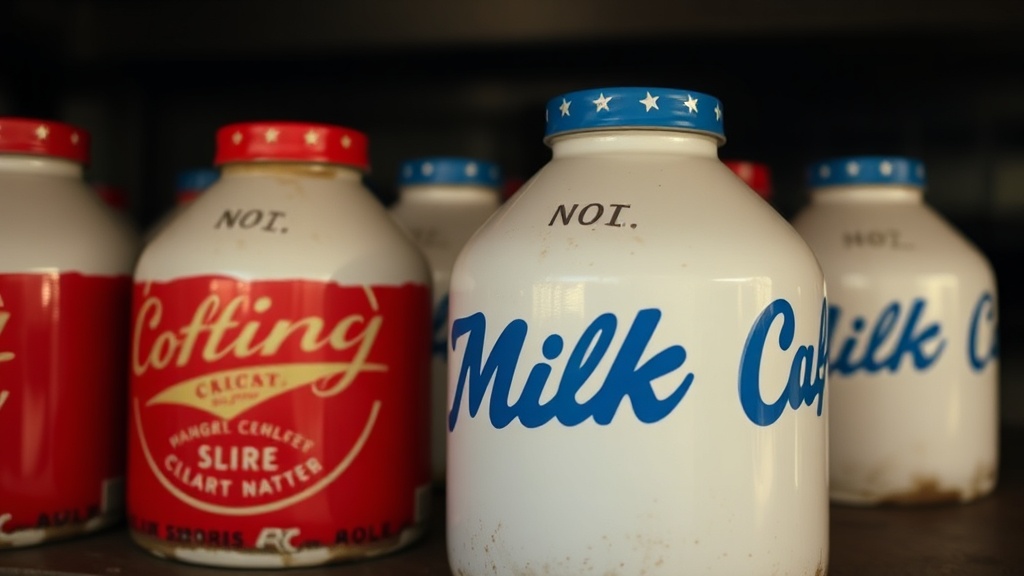
What Stories Do Vintage Milk Caps Tell About America's Dairy Heritage?

Every milk cap in your collection holds more than just a brand name and a splash of color. These small metal discs document the rise and fall of local dairies, the shift from horse-drawn delivery to supermarket refrigeration, and the regional flavors of American agriculture that have all but disappeared. In this guide, you'll learn how to read the visual language of vintage caps—spotting the marks that separate a common 1960s commercial piece from a rare Depression-era survivor, understanding why certain designs command premiums, and recognizing the historical moments frozen in these miniature canvases.
How Can You Tell the Age of a Milk Cap by Its Design Elements?
Milk caps evolved alongside bottling technology, and each era left distinct fingerprints on the caps collectors prize today. The earliest examples—from the 1920s through the 1940s—were simple affairs: plain metal discs with embossed dairy names and minimal decoration. These caps served a purely functional purpose, sealing glass bottles against contamination during a time when home delivery dominated.
By the 1950s, lithographed designs became standard. Dairies invested in colorful caps as mobile advertisements, knowing that housewives (and their children) would handle these caps dozens of times. Look for period-specific imagery: cows in pastoral settings, atomic-age starbursts, regional landmarks, and celebrity endorsements that anchor a cap to a specific decade. A cap featuring a television set or rocket ship almost certainly dates to the space-age optimism of the late 1950s and early 1960s.
The 1970s brought changes in manufacturing. Offset printing replaced letterpress, resulting in sharper images but sometimes flatter colors. Plastic-lined caps began appearing, though purists generally prefer the earlier paper-and-wax liners. By the 1980s, the decline of returnable glass bottles meant fewer distinctive caps—most dairies had switched to cartons or standardized designs for remaining bottle operations.
Key markers to examine: the depth of embossing (earlier caps have deeper relief), the presence of patent numbers (common from 1930-1960), and the style of dairy coding. Many caps include small numbers or letters indicating the bottling plant—these codes can help date a cap when cross-referenced with dairy industry records.
Which Regional Varieties Are Most Sought After by Serious Collectors?
Geography drives value in the milk cap world. Certain regions produced limited runs, experimental designs, or caps commemorating local events that make them highly collectible today. Understanding these regional hotspots can transform your collecting strategy.
New England dairies represent some of the earliest American milk cap production. Vermont and Massachusetts dairies operated during the golden age of home delivery, producing caps with distinctive pastoral imagery and high-quality lithography. Many featured specific cow breeds—Holsteins, Jerseys, Guernseys—rendered with surprising detail. These caps rarely appear in western collections, making them valuable trading commodities.
California cooperative caps from the 1950s and 1960s often featured space-age designs reflecting the state's aerospace industry and forward-looking culture. The Golden State Guernsey Producers and similar cooperatives issued caps with bold geometric patterns and saturated colors that stand out in any display. Their relative scarcity outside the West Coast makes them prized acquisitions.
Southern dairy caps frequently incorporated regional iconography: cotton bolls, magnolia blossoms, historic plantations rendered in soft pastels. These designs speak to a specific mid-century aesthetic and marketing approach. Florida citrus-milk blends (yes, they existed) produced some of the most unusual cap designs in the hobby.
Midwestern farm collectives issued caps celebrating state fairs, 4-H achievements, and local agricultural milestones. A cap commemorating the Iowa State Fair butter cow or the Minnesota State Fair dairy pavilion represents genuine agricultural heritage. The Iowa Department of Cultural Affairs maintains archives of these agricultural promotions.
Why Do Some Common-Looking Caps Command Premium Prices?
Value in milk cap collecting follows patterns that aren't always obvious to newcomers. A cap that looks ordinary might represent a rare color variation, a limited promotional run, or a short-lived dairy that operated for just a few months before consolidation swallowed it whole.
Color variations represent the most common source of unexpected value. Dairies often ordered caps in multiple color schemes—different caps for different bottle sizes, seasonal variations, or simply printer overruns. A standard dairy cap in an unusual color (red instead of blue, green instead of white) might indicate a special run for a holiday promotion or a specific retail account. These variations weren't cataloged at the time, making identification dependent on collector knowledge and comparison.
Promotional caps issued for specific events carry premiums proportional to their obscurity. A cap commemorating the opening of a local dairy plant, a regional sports championship, or a dairy industry convention represents a moment frozen in time. These weren't mass-produced for general distribution—they were created for specific occasions and limited runs.
Error caps—those with misprints, double-strikes, or color registration failures—attract specialized collectors. A cap with the dairy name printed off-center, missing colors, or visible ghost images from a previous print run on the same press sheet qualifies as an error. While some collectors dismiss these as damaged goods, others specifically seek them out as production curiosities.
Finally, caps from dairies that closed during industry consolidation (particularly the 1960s-1980s) have finite supply. Every collector interested in that region or era competes for the same limited pool. The National Dairy Council maintains historical records of dairy operations that can help identify these defunct producers.
What Preservation Mistakes Are Destroying Collections?
The small size of milk caps leads to complacency about storage. Unlike large collectibles that demand dedicated space, caps get tucked into drawers, jars, and boxes—often in conditions that accelerate deterioration. Understanding the specific vulnerabilities of these metal and paper artifacts can save your collection from gradual destruction.
Rubber band damage ranks among the most common—and most heartbreaking—preservation failures. Collectors often bundle caps by dairy or region using rubber bands for convenience. Over months and years, those bands degrade, leaving brown stains where they contacted the metal. Worse, they can fuse to painted surfaces. If you've inherited a collection held together by vintage rubber bands, remove them immediately (wear gloves—the degraded rubber can be sticky and chemically active). Replace with acid-free paper strips or archival-quality polyethylene sleeves.
PVC plastic sleeves—common and inexpensive—off-gas chlorine compounds that corrode metal over time. The greenish haze that develops on stored caps often indicates PVC-induced oxidation. Archival polyester (Mylar) or polypropylene sleeves cost more but provide chemically inert protection. Never store caps in direct contact with standard vinyl binder pages.
Humidity fluctuations cause paper liners to expand and contract, eventually separating from the metal cap. Basements and attics are particularly dangerous storage locations. Stable, moderate humidity (around 50%) prevents this cyclical damage. Silica gel packets in storage containers help, but they require regular monitoring and replacement.
Cleaning represents another minefield. That "patina" on an old cap might be original paint coloration rather than tarnish. Aggressive cleaning destroys information. When in doubt, don't clean—document the condition and consult experienced collectors before attempting any restoration.
Where Should Beginners Focus Their Early Collecting Efforts?
The vastness of milk cap collecting can paralyze newcomers. Thousands of dairies operated across a century of production, creating what seems like an impossible completionist challenge. Smart collectors narrow their focus early, building cohesive sub-collections that bring satisfaction without requiring impossible acquisition budgets.
Geographic specialization offers natural boundaries. Choose your home state, your grandmother's hometown, or a region you visit regularly. This focus creates manageable scope while building expertise. You'll learn the major dairies, the local history, and the specific design traditions of that area. When you attend shows or browse online listings, your geographic filter helps you evaluate opportunities quickly.
Temporal specialization provides another framework. The 1950s represent a sweet spot for many collectors—plentiful supply, attractive designs, and reasonable prices. Earlier decades offer scarcer material and higher costs but greater historical significance. Later decades (1970s-1980s) provide affordable entry points, though with fewer standout designs.
Thematic collecting appeals to visually oriented collectors. All caps featuring cow portraits. All caps with geometric patterns. All caps from dairies named after birds, trees, or geographic features. These whimsical categories create unexpected connections between disparate pieces and make for compelling display narratives.
Condition grading becomes easier with focused collecting. When you handle dozens of similar caps from the same era, you develop an eye for what "fine" versus "very fine" looks like in that specific context. This expertise translates to better buying decisions and fairer sales when you upgrade your collection.
"The best collection isn't the biggest—it's the one that tells a story you care about. Start there, and the acquisitions will follow."
The community aspect of milk cap collecting deserves mention. Unlike some collecting fields with cutthroat competition, milk cap enthusiasts tend toward collaboration. Experienced collectors remember their own beginner struggles and often mentor newcomers. Local historical societies welcome researchers documenting regional dairies. Online forums provide identification help and trading opportunities. Your first quality acquisition—whether a common piece in exceptional condition or a genuine rarity—represents entry into this community of preservationists and storytellers.
Documentation matters from day one. Photograph your acquisitions. Record provenance when available. Note condition issues before they fade from memory. This discipline pays dividends when you eventually sell, trade, or bequest your collection. More importantly, it transforms collecting from passive accumulation into active curation—you become a steward of material culture rather than merely an owner of objects.