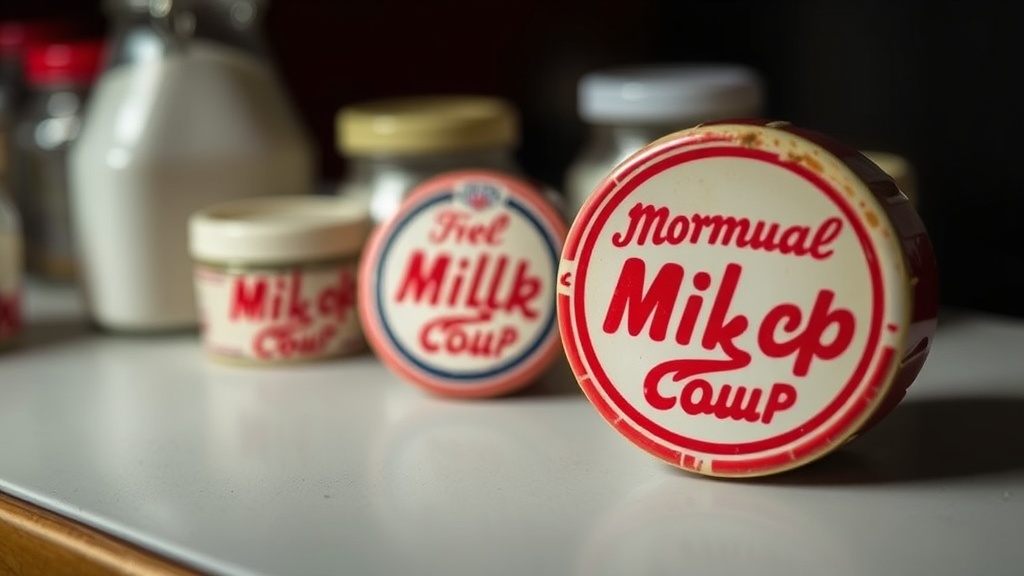
Uncovering the Character of Collectibles: Key Features of Vintage Milk Caps

Have you ever found yourself gazing at a vintage milk cap, wondering what stories its tiny details might tell? For enthusiasts and newcomers alike, understanding the nuances that define these humble collectibles can truly enrich your appreciation. There's a subtle science to identifying a cap's age, origin, and even its rarity—details often hidden in plain sight. This comprehensive guide will pull back the curtain on those very specifics, helping you discern the crucial elements that distinguish one cap from another and empowering you to make more informed additions to your collection. We'll delve into construction, materials, and those often-overlooked printing specifics that make all the difference.
What elements define a truly vintage milk cap?
When we talk about “vintage” in the context of milk caps, we’re generally referring to items produced from the late 19th century through the mid-20th century—typically before the widespread adoption of plastic and screw-top closures. These caps served a very practical purpose: sealing glass milk bottles to keep their contents fresh and sanitary. But over time, they evolved into miniature canvases for branding, advertising, and even local dairy lore. A genuine vintage cap usually exhibits characteristics tied to these bygone eras. You’ll often see signs of their original sealing function, like impressions from bottle rims or residual wax coatings, particularly on cardboard examples. Their aesthetic often reflects the design trends of the period, from Art Deco flourishes to simpler, utilitarian graphics. Think about the fonts, the imagery—are they consistent with materials printed 50, 70, or even 100 years ago? These stylistic cues are your first line of defense in determining authenticity and age.
Beyond the obvious aesthetic, consider the source. Many of the most sought-after vintage caps come from now-defunct local and regional dairies. Their designs are unique, reflecting a very specific time and place in commercial history. Caps from larger, national brands might be more common but can still hold value if they represent early branding iterations or commemorative editions. Identifying these historical markers takes a keen eye and a bit of research—you’ll find that a cap isn’t just a cap; it’s a tiny portal to a different time.
How can I distinguish different types of milk cap construction and materials?
The materials and construction methods employed in milk caps changed significantly over the decades, offering key indicators for collectors. Historically, most milk caps were made from treated paperboard, a durable and cost-effective solution for sealing glass bottles. These cardboard caps come in various thicknesses and often feature a wax coating on one or both sides, protecting them from moisture and providing a better seal. Early versions might be simple die-cut circles, while later ones incorporated pull-tabs or staples to make opening easier. The presence and type of these opening mechanisms can sometimes help narrow down a cap’s production period.
However, paperboard wasn't the only material in play. Some dairies experimented with metal caps, particularly for cream or specialized products. These metal caps, often aluminum, present a different set of collecting considerations, including susceptibility to dents and corrosion. You might also encounter caps with a combination of materials, such as a paper disk housed within a metal rim. Examining the edges, the texture, and any layering can reveal much about a cap’s construction. Does it feel flimsy or surprisingly sturdy? Is the cut clean or slightly irregular, suggesting older manufacturing techniques? These physical attributes are often just as telling as the printed graphics themselves. It’s a tangible connection to industrial history, where each material choice was a function of available technology and economic practicality.
Where do manufacturer marks and printing variations come into play for collectors?
For the astute collector, manufacturer marks and printing variations are like forensic clues—they can unlock a wealth of information about a milk cap’s past. Many caps, particularly those from the mid-20th century onward, bear small, often inconspicuous marks indicating the company that produced the cap itself, not just the dairy that used it. These printer marks, sometimes just initials or a tiny logo, can help corroborate the cap's purported origin or identify its printing run. Understanding these marks can be a rewarding, albeit detailed, area of study for serious collectors.
Beyond the manufacturing origin, the printing process itself offers a spectrum of variations. Early caps might display simpler, single-color designs achieved through letterpress or lithography. As printing technology advanced, dairies could incorporate more colors, finer details, and even photographic elements. Look closely at the registration of colors—are they perfectly aligned, or do you see slight misalignments common in earlier, less precise methods? Are there any overprints or color shifts that indicate a specific production run or a variation that makes a cap rarer? Sometimes, a dairy might have used different printing companies, resulting in subtle differences in typeface, color saturation, or even the exact placement of text or graphics. These small deviations can mean a lot to collectors striving for a comprehensive set. Consulting resources like local historical society archives or specialized dairy ephemera databases can often shed light on these subtle but significant distinctions, proving that even a tiny flaw can be a unique identifying feature. Also, don't overlook private collectors' forums, such as those found through a search for vintage advertising collectibles communities, which frequently host discussions on these precise topics.
Collecting vintage milk caps is an engaging pursuit, full of discovery. By paying close attention to the material, construction, and intricate printing details, you're not just gathering artifacts—you're curating a tangible history. Each cap, in its own way, tells a story of local commerce, graphic design evolution, and the everyday rituals of generations past. So, the next time you encounter one of these small wonders, take a moment; there's always more to see than you initially expect.