The Complete History of Milk Caps: From Dairy Lids to POG Mania

What This Guide Covers
This post traces the complete path of milk caps—from their humble beginnings as dairy container seals to the global POG phenomenon that captivated millions. Whether building a collection of vintage caps or simply curious about the origins of these small cardboard discs, this guide provides the historical context, manufacturing details, and collecting insights needed to appreciate these unassuming collectibles.
Where Did Milk Caps Originate?
Milk caps first appeared in the late 19th century as simple waxed cardboard lids for glass milk bottles. The Smithsonian Institution notes that before widespread refrigeration, milk delivery required sealed containers—and the humble cap kept dairy fresh during transport.
Dairies across North America and Europe printed their names, logos, and sometimes promotional messages on these lids. Early versions were purely functional. Thick cardboard discs, roughly 38mm in diameter, sealed bottles with a simple press-fit design. The wax coating prevented moisture absorption—critical in an era before refrigerated trucks.
Here's the thing: those early caps weren't collectible. They were trash. Delivery drivers collected empties, washed bottles, and the caps went straight into the garbage. The transformation from refuse to treasured object happened gradually—and somewhat accidentally.
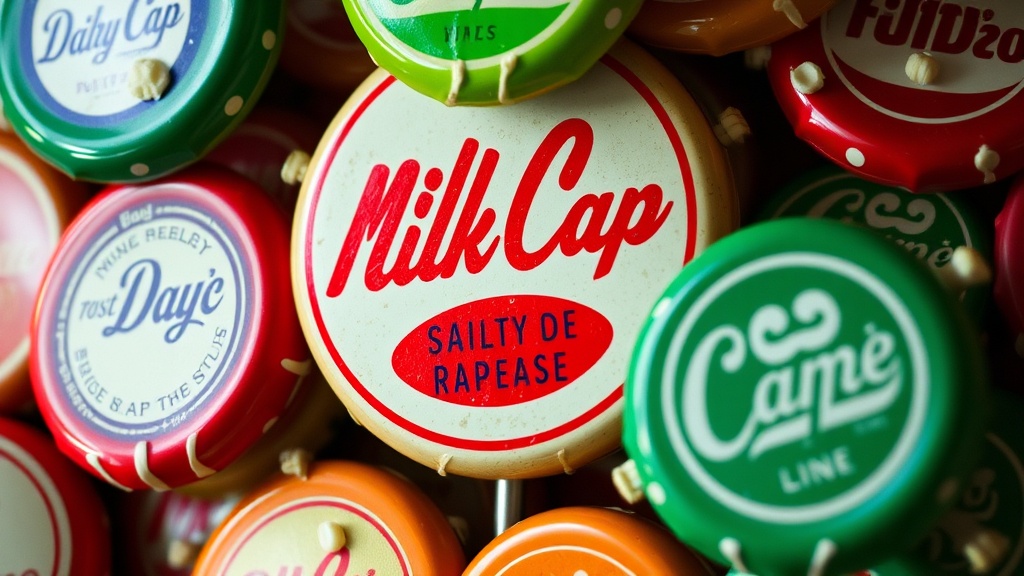
By the 1920s, regional dairies began using colorful lithographed caps as advertising. A cap from Borden's in New York might feature Elsie the Cow. A California dairy might showcase golden poppies. These designs—ephemeral by design—became unintentional art. Some children (and adults) started saving them.
What Are POGs and How Did They Start?
POGs originated in Hawaii during the 1920s as a brand-specific milk cap from Passion Orange Guava juice—a drink produced by Mead Johnson. The caps featured the POG logo and became popular playthings among Hawaiian children long before the name went mainstream.
The game was simple. Stack caps face-down. Slam a heavy "slammer" disc onto the pile. Keep whatever flipped over. This slapping game—versions existed in Japan (menko), the UK (pogs), and elsewhere—found its perfect vehicle in the sturdy cardboard milk cap.
Worth noting: Hawaiian kids didn't call them POGs initially. They were just "milk caps" or "caps." The POG brand association stuck because those particular caps were ubiquitous in the islands—and because the bright, fruity designs appealed to children.
The modern POG craze traces directly to one teacher. In 1991, Blossom Galbiso—a guidance counselor at Waialua Elementary School on Oahu—introduced the game to her students as a non-violent recess activity. The children brought caps from home. Word spread. Within months, what started as a local pastime erupted into a statewide phenomenon.
By 1993, mainland manufacturers caught wind. The World POG Federation formed to standardize the game and license official merchandise. Alan Rypinski—a Canadian businessman who'd acquired the POG trademark—began aggressive marketing. Suddenly, every convenience store, comic shop, and toy aisle stocked these small discs.
What's the Difference Between Vintage Milk Caps and Modern POGs?
The distinctions matter for collectors. Here's how they break down:
| Characteristic | Vintage Dairy Caps (pre-1990) | Modern POGs (1991-1997) |
|---|---|---|
| Material | Waxed cardboard, sometimes with foil backing | Thicker cardstock, plastic laminate, holographic variants |
| Size | 38mm standard (variations exist) | Strictly standardized at 38mm |
| Design | Dairy logos, simple two-color prints | Licensed characters, sports teams, full-color artwork |
| Rarity | Scarce—most were discarded | Mass-produced, millions exist |
| Value Range | $5-$500+ for rare specimens | $0.25-$50 for common to rare licensed sets |
The catch? Condition matters enormously for vintage pieces. A 1940s cap from a defunct New England dairy—crisp edges, no staining, logo fully visible—commands serious money. The same cap with water damage or creasing? Essentially worthless. Modern POGs, conversely, rarely justify grading services unless they're sealed promotional sets from McDonald's, NFL teams, or limited convention releases.
How Do You Identify and Value Vintage Milk Caps?
Authentication requires attention to detail. Genuine vintage caps have telltale characteristics.
First, examine the edge. Pre-1950 caps often show irregular cuts—scissor marks or die-cut variations from hand-operated machinery. Post-1950 manufacturing standardized considerably. The cardboard itself provides clues: older caps use thicker stock with visible fiber texture, while 1970s-80s versions trend thinner and smoother.
Watermarks help dating. Hold a cap to light. Early wax coatings create translucent halos around printed areas. Later polyethylene coatings appear more uniform. Some collectors use ultraviolet light—certain 1940s-50s inks fluoresce distinctively under blacklight.
That said, reproductions exist. The 1990s POG boom inspired counterfeit "vintage" caps sold to unsuspecting collectors. Red flags include: too-perfect condition, anachronistic printing techniques, and—most tellingly—modern paper stocks. When in doubt, consult specialized references like "The Milk Cap Manual" by collector James Wieland or join communities like the Society for Historical Archaeology's material culture forums.
Value factors include:
- Rarity: Small dairies produced fewer caps than national brands. A 1930s cap from a family operation in rural Montana trumps a Borden's common.
- Condition: Mint vintage caps are extraordinarily scarce. Most surviving examples show staining, creasing, or edge wear.
- Artwork quality: Full-color lithography commands premiums over simple text logos.
- Historical significance: Caps from dairies involved in significant events (wartime production, famous local figures) carry narrative value.
What Happened to the POG Craze?
The bubble burst around 1997. Oversaturation killed it. Manufacturers pumped out billions of caps—licensed characters, sports partnerships, movie tie-ins. Kids couldn't keep up. Collections grew unwieldy. The playground novelty wore thin.
Retailers who'd stocked dedicated POG displays cleared shelves at clearance prices. The World POG Federation dissolved. Alan Rypinski sold the trademark. For a decade, these discs gathered dust in attics and storage bins—the quintessential 90s fad, embarrassing to admit you'd collected.
But here's what's interesting: neither milk caps nor POGs disappeared entirely. Hawaii maintained the tradition. The islands' children never stopped playing—just more quietly, away from mainland marketing. Vintage dairy cap collecting persisted as a niche numismatic pursuit, with specialized auction houses like Hake's Americana periodically featuring significant collections.
Modern revival attempts have emerged. Limited-edition POG releases (Sanrio collaborations, retro gaming licenses) target nostalgic millennials. Some craft breweries—ironically—have adopted milk cap-style lids for specialty bottle releases. The circle closes.
How Should Collectors Store and Display Milk Caps?
Preservation requires climate control. Cardboard hates humidity. Waxed vintage caps are particularly vulnerable—they'll warp, discolor, and eventually delaminate in damp conditions.
Recommended storage methods vary by collection type:
- 2x2 cardboard holders: Standard for vintage dairy caps. Acid-free boards with clear Mylar windows. Store vertically in archive boxes.
- Plastic pages: Acceptable for modern POGs. Nine-pocket trading card pages work perfectly. Avoid PVC—polypropylene only.
- Original containers: Some collectors prize the cylindrical tubes and tins that held 90s POG sets. Keep these, but don't store caps long-term inside—trapped moisture damages cardboard.
Display considerations matter too. Direct sunlight destroys colors within months. Frame UV-protective glass if showing prized pieces. Group by theme—dairy era, region, or license—rather than dumping everything together. A well-organized collection tells a story. A shoebox of random caps just looks like clutter.
The market remains active, if subdued. eBay moves hundreds of listings monthly. Specialized dealers at bottle shows (yes, that's a thing—the Federation of Historical Bottle Collectors hosts annual conventions) often carry milk cap selections. Estate sales in dairy country occasionally yield untouched collections from the 1940s-60s—the collector's holy grail.
Whether hunting rare Hawaiian juice caps from the 1930s or completing a 1995 NBA POG set, these small cardboard discs connect collectors to industrial history, childhood nostalgia, and the peculiar human impulse to save what others discard. Start small. Learn the tells. And remember—the best collections aren't built overnight. They're accumulated. One cap at a time.