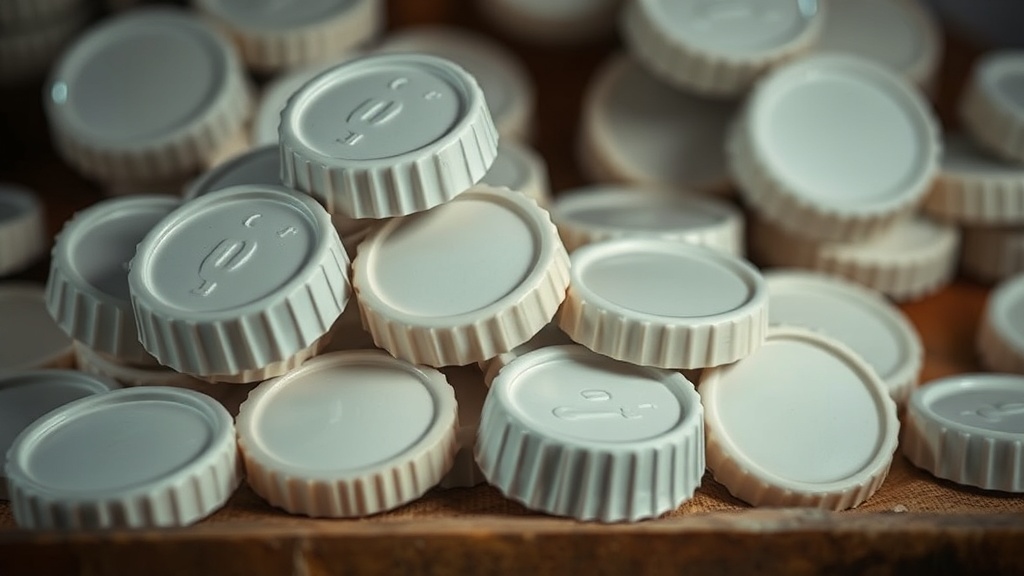
Store Milk Caps Flat to Prevent Warping and Damage

Quick Tip
Always store milk caps flat in acid-free sleeves or archival pages to prevent warping and protect the printed surface from wear.
Storing milk caps flat isn't just a matter of preference—it's the difference between a pristine collection and warped, cracked plastic that loses value fast. This guide covers why horizontal storage matters, the best containers for the job, and common mistakes that ruin caps over time. Whether you've got a handful of vintage tops or hundreds of POGs from the '90s, the way you store them determines how long they'll last.
Why do milk caps warp when stored upright?
Gravity and pressure work against vertical storage. When caps stand on edge in a jar or tube, their weight concentrates on small contact points. Over months and years, this creates stress cracks and that tell-tale taco bend you can't reverse. (Heat accelerates the process—attics and garages are cap killers.)
Plastic milk caps from the 1950s through 1980s—think Borden's Elsie the Cow or regional dairies like Anderson-Erickson—were made from polystyrene or early polyethylene blends. These materials relax under load. Even modern POGs, though sturdier, will deform if stacked vertically in a warm closet.
The physics are simple. A cap lying flat distributes its minimal weight across the entire surface. Standing up, it doesn't.
What's the best way to store milk caps flat?
Archival-quality trading card storage boxes with dividers work better than anything marketed specifically for caps. The BCW 3,200-Count Storage Box holds hundreds of caps laid flat in rows, separated by acid-free index cards. You'll want to avoid cardboard that isn't acid-free; it off-gases and yellows plastic over decades.
For smaller collections, Coin Envelopes #1 from Staples offer individual protection. Slide one cap per envelope, store the envelopes flat in a shoebox, and label the outside with a Sharpie. It's cheap, effective, and takes up minimal shelf space.
Worth noting: caps with foil liners or wax seals need breathable storage. Airtight containers trap moisture and encourage mold. The Sterilite 6-Quart Storage Box—available at Target and Home Depot—has a lid that seals but doesn't vacuum-lock, letting air circulate without inviting dust.
How do you prevent damage to vintage milk caps?
Handle them by the edges only. Finger oils degrade printed designs, especially on older caps with water-based inks. Cotton gloves help, but washed bare hands work fine if you're careful.
Light exposure matters more than most collectors realize. UV rays fade vibrant reds and blues into washed-out pastels. Store boxes in drawers, closets, or anywhere away from windows. If display is non-negotiable, UV-blocking acrylic cases from Uline protect individual pieces without the bulk of a full curio cabinet.
Here's how common storage methods compare:
| Storage Method | Best For | Cost | Longevity |
|---|---|---|---|
| BCW 3,200-Count Box with dividers | Large collections (500+ caps) | $15-25 | 20+ years |
| Coin Envelopes in shoebox | Small collections, rare items | $10-15 | 15+ years |
| Sterilite 6-Quart Box | General storage, POGs | $5-8 | 10+ years |
| UV acrylic display cases | Showpiece items | $8-15 each | Indefinite |
The catch? Even perfect storage can't fix existing damage. A warped cap stays warped. That's why prevention starts now—with whatever collection you've got. The Northeast Document Conservation Center recommends keeping paper and plastic collectibles below 70°F with relative humidity under 50%. The American Institute for Conservation offers additional guidance on handling vintage polymers.
Start with what you have. Move those upright tubes and jars to flat storage this week. Your future self—and your caps—will thank you.