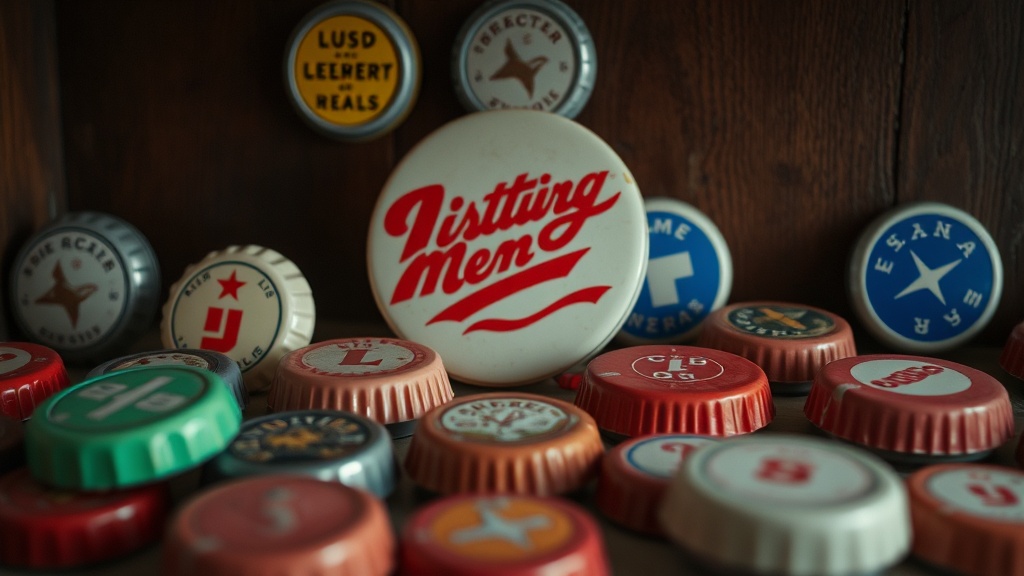
Assessing the Condition of Vintage Milk Caps: A Collector's Checklist

Assessing the Condition of Vintage Milk Caps: A Collector's Checklist
At its zenith, the US dairy industry boasted over 100,000 independent dairies, each potentially issuing their own distinctive milk caps—a staggering volume that underscores the incredible diversity collectors encounter today. For those navigating this rich field of ephemera, understanding how to accurately assess the condition of a vintage milk cap is not just an advantage; it’s fundamental to building a valuable, well-curated collection. This guide will walk you through the nuanced aspects of grading, offering insights that move beyond superficial observation to a detailed examination of what truly defines a cap’s quality and market worth.
What Factors Determine a Milk Cap's Value?
When you hold a vintage milk cap, you’re not just looking at a piece of cardboard; you’re holding a tangible fragment of history. But what makes one cap highly coveted while another, seemingly similar one, languishes? The answer lies in a confluence of factors, with condition often reigning supreme, though not in isolation. Rarity, for instance, plays a significant role. A cap issued by a small, short-lived dairy in a remote region will naturally be scarcer than one from a major metropolitan producer. Yet, a rare cap in poor condition may still fetch less than a common cap in pristine state—it all depends on the specific piece and the market.
Historical significance also adds layers of value. Caps commemorating specific events, advertising now-defunct brands, or featuring unique artistic styles from a bygone era often draw a premium. Demand, too, is a powerful, if sometimes fickle, determinant. Certain themes, graphics (like whimsical animals or early comic characters), or even regional allegiances can create spikes in collector interest, driving up prices for particular caps. However, even with all these elements aligned, a cap's physical state—its condition—serves as the bedrock upon which its ultimate valuation is built. A truly exceptional piece will combine rarity, historical intrigue, and an immaculate presentation, making it a centerpiece for any serious collector.
How Do You Accurately Grade a Milk Cap's Physical State?
Grading a milk cap is a meticulous process, far more intricate than a cursory glance. It requires a keen eye, good lighting, and often, a jeweler's loupe or magnifying glass to catch the subtle imperfections that can dramatically alter its grade. Think of it as forensic examination—every detail matters. We break this down into several critical areas:
Centering and Print Quality: Begin by examining the cap's printing. Is the design perfectly centered on the disc, or is it off-kilter? Misaligned printing, where the image encroaches on the outer rim or is noticeably skewed, can reduce value. Beyond centering, assess the print's clarity and vibrancy. Are the colors sharp and rich, or faded and muddy? Look for evidence of ink smudges, registration errors (where colors don't align correctly), or any loss of original sheen. A well-printed cap with crisp details and strong, unfaded colors is always preferred.
Creases, Bends, and Folds: This is arguably the most critical area. Any crease, no matter how minor, constitutes damage. A "crease" implies a permanent fold or line in the cardboard that has broken the fibers. "Bends" are less severe, often gentle undulations that haven't creased the material but indicate a lack of flatness. "Folds" are major creases. Even a faint stress line, visible only under angled light, will impact the grade. Caps that have been stored improperly—stacked, folded, or crammed into tight spaces—are particularly susceptible to these issues. A cap should ideally be perfectly flat, free from any structural compromises.
Stains and Discoloration: Vintage paper products are vulnerable to environmental factors. Inspect for any stains, which can range from faint watermarks or grease spots to pronounced discoloration from rust (often from wire bails), mold, or general grime. Sun exposure can lead to fading, especially on one side, while acid migration from improper storage materials can cause yellowing or browning. The presence of milk residue, though historically accurate, is generally considered a condition flaw if it causes staining or damage to the cap itself. The goal is a cap with its original, uniform color integrity.
Edge Wear and Tears: The edges of milk caps are often the first to show wear. Look for fraying, nicks, small tears, or delamination of the cardboard layers. Even tiny imperfections here can be significant. A cap that has been removed from a bottle with undue force might show specific damage patterns, like jagged tears near the tab or along the perimeter where it sealed the bottle opening. A perfectly circular, smooth edge without any breaks or thinning is the ideal.
Punch Holes or Alterations: This category encompasses anything that fundamentally alters the cap from its original manufactured state, beyond natural wear. Punch holes—whether from a paper punch, a staple, or a pin—are considered significant damage. Evidence of repair, such as glue residue, tape, or colored-in areas to hide flaws, will drastically reduce value. Even subtle attempts to flatten a bent cap can leave tell-tale signs. Authenticity and originality are paramount; any non-factory alteration is a major detriment.
By systematically evaluating these five areas, you can develop a comprehensive understanding of a milk cap's condition. For a visual reference and deeper dive into print anomalies, resources like the