5 Creative Ways to Display Your Vintage Bottle Cap Collection

Shadow Box Frames for Organized Displays
Magnetic Boards for Interactive Arrangements
Resin-Encased Tables and Coasters
Vintage-Style Apothecary Jars
Custom Backlit LED Display Cases
Collectors often face the same dilemma: how to showcase bottle caps without cramming them into shoeboxes or letting them collect dust in drawers. This guide covers five creative display methods that protect vintage caps while turning them into conversation pieces. You'll learn practical setups ranging from quick weekend projects to professional-grade installations—each designed to preserve the integrity of rare finds while giving them the visibility they deserve.
How Can You Display Bottle Caps Without Damaging Them?
The safest displays use acid-free materials and avoid adhesives that touch the cap surface directly. Pressure mounts, shallow trays, and UV-protective glass are your best allies here.
Many collectors learn this lesson the hard way. That hot glue gun seems convenient—until a rare 1920s Coca-Cola cap loses its porcelain coating. The catch? Adhesives age poorly, yellowing and becoming brittle over decades. Instead, opt for archival methods. Shadow boxes with spacers keep caps secure without contact damage. Michaels' Studio Decor shadow boxes offer UV-protective acrylic at reasonable prices, though serious collectors might prefer Museum Glass from Jo-Ann Fabrics for its superior clarity and 99% UV filtration.
Consider the environment, too. Boise's dry climate (Hana's home base) poses fewer humidity risks than coastal regions, but temperature swings near windows still threaten metal caps. Direct sunlight fades paper liners and accelerates rust on steel crowns. Position displays away from south-facing windows, or invest in UV-filtering film from 3M if natural light is unavoidable.
What Are the Best DIY Bottle Cap Display Ideas?
DIY options range from magnetic boards to custom-built map installations, with costs varying from $20 to $300 depending on scale and materials.
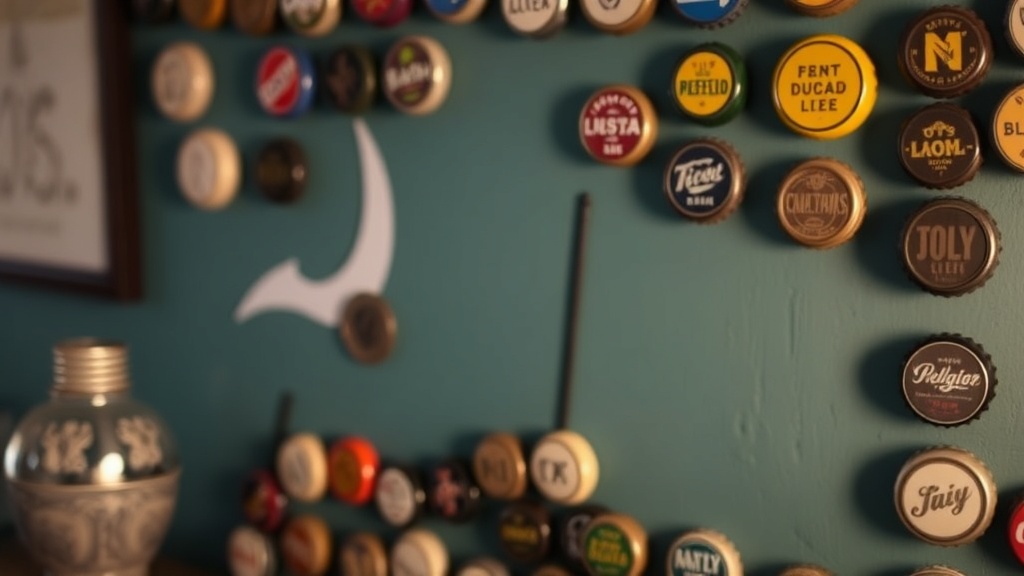
The magnetic approach wins for flexibility. Sheet metal from Home Depot (roughly $12 for a 24"×36" piece) mounts easily to walls with French cleats. Rare earth magnets—NEODYM 6mm discs from Amazon—hold even heavy ceramic caps securely without visible fasteners. Arrange caps geographically, chronologically, or by brewery. Change the layout whenever you acquire new pieces. That said, keep magnets away from caps with paper inserts; the magnetic field won't damage them, but handling might.
Map displays resonate with collectors of regional breweries. Hana once documented a collection tracing Idaho's defunct soda bottlers across a vintage 1950s state highway map—each cap pinned to its town of origin. Foam core backing, map decoupage, and brass pins create a striking visual narrative. The entire project cost under $40 and now hangs in a Boise coffee shop (with permission, of course).
For smaller collections, try repurposed wooden printers' trays. These compartmentalized drawers—originally used for metal type—fit crown caps perfectly. Etsy sellers like VintageIndustrial and TheOldTimeJunkShop list authentic trays between $35-$85. Sand lightly, apply Danish oil, and mount horizontally as wall shelves.
DIY Display Comparison
| Method | Cost | Skill Level | Best For | Pros | Cons |
|---|---|---|---|---|---|
| Magnetic board | $25-50 | Beginner | Active collectors | Rearrange anytime | Visible backing |
| Map display | $30-75 | Intermediate | Regional collections | Tells geographic story | Fixed positions |
| Printer's tray | $35-100 | Beginner | Small, curated sets | Authentic vintage aesthetic | Limited capacity |
| Epoxy resin table | $150-400 | Advanced | Duplicate/common caps | Functional furniture | Permanent arrangement |
| Acrylic risers | $40-120 | Beginner | High-value singles | Museum-quality presentation | Expensive at scale |
Where Should You Buy Ready-Made Bottle Cap Display Cases?
Specialized retailers like Collector's Workshop, Frame Destination, and DisplayGifts offer purpose-built cases ranging from $45 desktop holders to $400 wall-mounted cabinets.
Here's the thing: generic craft store frames rarely accommodate crown cap dimensions (typically 26mm diameter, 6mm height). Custom cuts matter. Frame Destination sells deep-profile shadow boxes with 1.5-inch depths—perfect for layered arrangements where caps sit on risers. Their basswood frames start around $68 for 16"×20" sizes, with custom mat cutting available.
Desktop collectors should consider DisplayGifts' acrylic pyramid stands. Clear, stackable, and dust-resistant, these showcase individual caps or small groupings. Each tier holds roughly 25-30 caps, and expansion sets connect vertically. At $22 per pyramid, they're not cheap—but neither is that 1930s Orange Crush cap you've been meaning to highlight.
Worth noting: Amazon basics abound, but read reviews carefully. Some "bottle cap displays" are repurposed poker chip holders with slightly wrong dimensions. Caps rattle. They tilt. The presentation looks amateur. Spend the extra $15 for something designed specifically for crown caps.
Can You Turn Bottle Caps Into Functional Furniture?
Yes—resin-encased tabletops, bar surfaces, and even flooring incorporate bottle caps permanently while preserving them beneath protective layers.
This approach isn't for rare specimens. (Never bury a mint-condition Dr Pepper ten-two-four cap in epoxy—you'll regret it.) But duplicates, common brands, and damaged caps find new purpose here. The process demands patience: arrange caps face-up in a mold or recess, pour clear casting resin in thin layers (TotalBoat TableTop Epoxy works well), and cure between pours to prevent bubbles.
Boise's Bittercreek Alehouse features a stunning example—an entire bartop embedded with thousands of local and regional caps donated by patrons. The installation took three weeks, employed a professional resin specialist, and remains the restaurant's most photographed feature. Home versions require less ambition. Start with a small side table from IKEA (the LACK series, $16) and create a 12"×12" inset panel.
The catch? Mistakes are permanent. Practice on disposable caps first. Temperature control matters—resin cures best at 70-75°F with low humidity. And ventilation isn't optional; those fumes will give you headaches for days.
How Do Museums and Serious Collectors Display Rare Bottle Caps?
Professional archival methods emphasize inert materials, climate control, and minimal handling—often employing museum wax, polyester film pockets, and sealed microclimate frames.
Gaylord Archival supplies many serious collectors with polyester L-sleeves (Mylar D)—clear, inert, and chemically stable for decades. Caps slide in, sit flat in boxes, and remain visible without exposure to adhesives or pressure points. For exhibition, museums use Neodymium mounts hidden behind display boards or specialized "invisible" stands from Hampshire Display.
Conservators at the Library of Congress (which holds significant advertising ephemera collections) recommend against laminating, spray-coating, or otherwise modifying vintage materials. Even "archival" sprays contain solvents that may react unpredictably with century-old metal or paper. When in doubt, consult the American Institute for Conservation guidelines for metals and organic materials.
Humidity control separates hobby displays from professional-grade preservation. Silica gel packets (indicating orange-to-green types from Dry-Packs) regulate moisture in enclosed cases. Replace or reactivate them quarterly. For high-value collections, electronic dehumidifier rods (like the GoldenRod series) maintain 40-50% relative humidity in display cabinets.
Quick Setup: Weekend Display Project
- Source a 24"×36" galvanized steel sheet from Home Depot ($18) or a local sheet metal shop
- Mount to wall using aluminum French cleats—more secure than adhesive for heavy installations
- Apply two coats of Rust-Oleum chalkboard paint if you want a dark background (optional)
- Purchase 100-pack of 6mm×3mm Neodymium magnets ($12 on Amazon)
- Arrange caps by theme, color, or era—photograph the layout before committing
- Affix magnets to cap interiors using tiny dots of Blu-Tack (removable, non-damaging)
- Step back. Adjust spacing. Live with it for a day before finalizing positions.
Hana's seen magnetic displays holding 400+ caps across entire hallway walls. The flexibility allows seasonal rotations—summer sodas in July, holiday spice beers in December. Visitors invariably stop, examine, ask questions. That's the point, isn't it? Collections deserve witnesses.
What About Lighting and Presentation Details?
LED strips with 90+ CRI (Color Rendering Index) illuminate caps accurately without heat damage, while adjustable gooseneck lamps work well for rotating featured pieces.
Poor lighting kills even the best display. Incandescent bulbs yellow caps and fade painted surfaces. Fluorescent tubes cast everything in institutional dreariness. Modern LED options from Philips Hue or LIFX offer tunable white temperatures—cooler settings (5000K+) show metallics better, while warmer tones (2700K) suit vintage aesthetics.
Consider motion-activated options for rarely-visited display rooms. No point burning 12 hours of electricity daily. The AMIR Motion Sensor Light ($25 for a three-pack) sticks inside shadow boxes or under shelving, illuminating only when someone's actually viewing.
Labels improve displays from hoarding to curation. Simple brass card holders (antique style from Amazon) identify brewery names, dates, and acquisition stories. Use Pigma Micron archival pens—ink that won't feather or fade. Handwrite if your script's decent; otherwise, 10pt Garamond printed on cream cardstock looks classic.
Rotation keeps displays fresh. That said, don't shuffle weekly—handling causes wear. Quarterly rotations work well for active collectors. Store off-display pieces in Guardhouse coin storage boxes with acid-free dividers. These archival containers cost roughly $25 but protect investments worth exponentially more.
Boise's community of collectors (Hana's circle) shares display photos at monthly meetups. The creativity astounds—one member converted an antique medicine cabinet into a lit, mirrored shrine for pharmaceutical bottle caps. Another built a rotating motorized drum from a vintage 16mm film reel case. Your display reflects your collection's personality. Start simple. Evolve. The caps will wait—they've survived decades already.